Sunday, May 24, 2009

Recipe For A Rainbow


Take a little rain, spread warm, late afternoon sunshine over Miami Beach, and capture quickly with a little point and shoot.

Then incline camera for second helping, and walk 90 degrees from the direction of the light to adjust the apparent end of the rainbow to where a bystander waits for the light rain to stop:


Then darken the bottom lightly in Photoshop as the clouds move by:

Labels: , , , ,

Saturday, April 25, 2009

The Kent Hotel Video Remix

Here's a video I made with stills from my photo-shoot at The Kent Hotel last week.


This Miami Beach landmark on Collins Avenue was designed by architect L. Murray Dixon in a streamlined Art Deco style in 1939 and was recently renovated.

Photos from the shoot will be used in the hotel's new website and other advertising collateral.

The music is by the great Cuban Mambo king Perez Prado from a circa 1952 video clip found on YouTube. And my photo assistant on the shoot was Adam Dalziel.

Labels: , , , , , , , , ,

Thursday, January 01, 2009

Happy New Year!


Fireworks at the birth of 2009 in Miami Beach.

Ocean Drive was closed to cars; the restaurants set up extra tables and chairs on the pavement and people danced in the street. It was a huge, happy, peaceful, multicultural crowd of all ages: many families with babies in strollers, as well as many young couples, of course. And the vibe was an Obama-like calm, an easy-going warmth.

Labels: , ,

Sunday, April 06, 2008

Neon, the Night and the G9

It was built in 1948 in New Jersey, but it sits today in Miami Beach on the corner of Washington and 11th, a big silver slice of gleaming, open-24-hours-a-day, Americana: the 11th Street Diner.

The menu is just what you'd want from a diner: not gourmet, but real diner food: omelets and toast, open-faced turkey sandwiches, biscuits and gravy, malteds, American coffee and apple pie a la mode. Big portions. And OK, yes, they have some tofu and salmon things, too. And a full bar. This is South Beach after all.


I've photographed the place quite a few times, including a lit, medium format shot done inside the diner and featuring a sexy, sassy blonde named Christine Lyons wearing a vintage-style waitress uniform -- she actually worked at the diner while also running an indie record label on the side. I think she was a singer, too, if I remember correctly. That shoot was for Amica, a terrific Italian fashion magazine, and I later also used that shot in my now out-of-print book South Beach, America's Riviera, published in 1995.

Anyhow, Friday night I was walking home after a fine swordfish dinner with an old friend at Grillfish, when the diner loomed up at me in all its Streamline Moderne glory, and I couldn't resist photographing it again, this time with a little pocket camera I carry with me all the time now, the Canon G9.

This 12.1 megapixel baby fits in the palm of your hand, but it's surprisingly heavy for such a little thing, almost 10 ounces. An astonishing amount of very high technology is packed inside; and despite some design compromises and at least one design blunder -- the incredibly inaccurate optical viewfinder -- the thing's a gem.

I made the above image hand-held (!!!) at 1/10th of a second at f3.2 and ISO 400 at a focal length equivalent to 70mm.

The camera's built-in image stabilization helped me to get a sharp image at such a slow shutter speed, and the image was much less noisy than I expected. That is is to say it was less grainy than I expected. (Grain, or noise, is a problem with small digital sensors cranked up to high sensitivity in low light).

The G9 has become a cult cameras for many of us -- it's so light you can take it anywhere, and it has a superbly sharp lens, with a zoom range equivalent to 35 to 210mm.

You can buy one for around $450, plus you'll need a high capacity memory card.


The above image was handheld at 1/5th of a second with the G9 at f3.2 and ISO 200; but it got rather noisy when I goosed up the saturation in Photoshop -- still nice, though

The worst thing about the camera is the optical viewfinder, which seems to point in a somewhat different direction than the lens! It's worse than useless -- it's positively misleading, a huge mistake in a semi-pro camera. Of course, there is an excellent 3" LCD screen for focusing and composing, but a good optical viewfinder is also needed, especially when you want to jam the cameras against your brow to help keep it steady for those slow hand-held exposures.

I'd be willing to pay about $35 more to also have a good optical viewfinder in a camera like this. Also the high ISO performance should be improved. The grain becomes really horrid at ISO 1600.

Even so, this is an amazing piece of technology.

Labels: , , , , ,

Thursday, February 21, 2008

Doorways in Time


Back in the 1930s and '40s, before air-conditioning was commonplace, most houses in Miami Beach had screen doors -- beautiful Art Deco screen doors.

Though South Beach's historic district is supposed to be protected from changes that destroy its unique character, quite a few of the elegant old doors have disappeared during the last 15 years.

I think many rusty or broken ones were simply junked by owners who didn't recognize their value.


Others, however, remain; and some have even been restored.

Illustrated here are three old ones that remain in or near Miami Beach's now booming South Pointe area

When I first saw this neighborhood at the southern tip of Miami Beach, back in 1992, it was a slum; and many old cottages, small apartment buildings and little hotels were in ramshackle disrepair alongside a few that hip entrepreneurs had fixed up. Now the neighborhood has been revived with ultra high-end, high-rise condos ringing the waterfront; and some of the older buildings have been lost. Many still remain, though, along with their remarkable doors.


I made these pictures yesterday afternoon with a little Canon G9 that when I'm not shooting professionally with my big cameras, I carry with me everywhere.

Labels: , , , , ,

Tuesday, November 06, 2007

Sleepless in Miami


Saturday night Miami Beach was more interesting than usual with art installations and live performances all over town nearly until dawn -- part of what was billed as a $400,000 "Sleepless Night" of culture.

Hookers were still click-clacking in their heels on Collins Avenue; and clueless teenagers, hip-hoppers and twenty somethings were still lining up to get into overpriced clubs on Washington guarded by hulking bouncers in suits -- a far cry from the glorious times of yesteryear (some 15 years ago) when the clubs were still cool, the crowds hipper, and achingly beautiful women in drop-dead gowns or drag queens in wings -- door goddeses they were called -- guarded the doors, deciding who'd get in.

Anyhow, the lure of the neon got to me, so I took some fast lenses (a 50mm f1.4; a 28 f1.8; and a 135mm f2) plus a 17- megapixel Canon 1Ds Mk3, and walked about for couple hours.

I shot architecture more than people -- though there were some cute kissing couples in Plaza de España, where Dana Keith's great Miami Beach Cinematheque put on an outdoor showing of the 1929 Surrealist classic Un Chien Andalou accompanied by a live performance of a flamenco troupe.

Even so, it was the architecture, the approximately 70-year-old Art Deco architecture, that drew me the most; and I photographed it handheld, mostly with the 28mm wide-angle, and then made the perspective more rectalinear in Photoshop, adjusting away distortion and making the lines more true.

The Sigma lens, the 28, is big and heavy, and I didn't think it would be very sharp wide open -- but it was, and yet had a creamy quality, abetted by some High Dynamic Range post-processing I dd in Photoshop.

I hadn't shot with my fast lenses for a long time -- I've been using f2.8 and f4 zooms and tilt-shift lenses mostly. But this was a return to my roots: I used to do photojournalism with a fast 50, a 28, and a 135; I love those focal lenghts.

Labels: , , , , , , , ,

Sunday, July 15, 2007

Versace - 10 years later

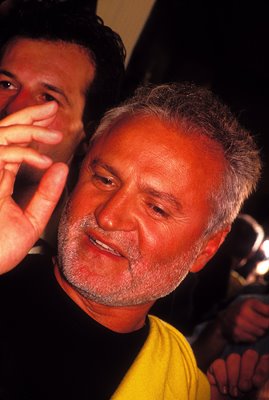
Ten years ago today, Gianni Versace was murdered on the rich stone steps of his Ocean Drive palazzo, his tragic and senseless death marking the end of a Miami Beach era.
I wrote about this a year ago in two related posts, here and here

Labels: , , , ,

Saturday, June 30, 2007

Party time for Southern Wine & Spirits


In a lovely Mediterranean Revival-style mansion hidden behind an unobtrusive entrance on Miami Beach's Collins Avenue, there was a party for South Florida restaurateurs and the beverage industry, sponsored by Southern Wine & Spirits, the nation's largest distributor of wine and spirits.


A trade magazine, Patterson's Tasting Panel asked me to photograph the party for a couple hours.

These are a few of the images I made for them.


Labels: , , , ,

Monday, July 24, 2006

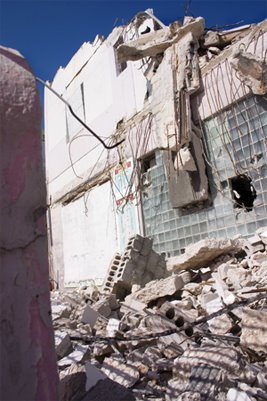
The Death of the Charles Hotel


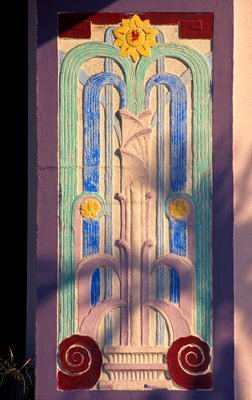
Walking on Miami Beach's Collins Avenue today, I remembered the now-vanished Charles Hotel, a Deco gem built in 1938, but demolished in 2004 -- even though it was in a supposedly officially protected historic preservation district.


The owner seemed to let it deteriorate until it was deemed structurally unsound and he could get official permission to knock it down. Now a not-bad, post-modern, low-rise condo building has been erected on the spot.


But the Art Deco panels -- some of the best bas-reliefs in South Beach -- that decorated The Charles are gone forever. Here's what they looked like. The first picture is of the north wall; the closeup is of a more or less identical panel on the west wall, beside what was the main entrance to the Charles Hotel.

Labels: , , , , , ,

Saturday, July 15, 2006

Versace Shot Dead


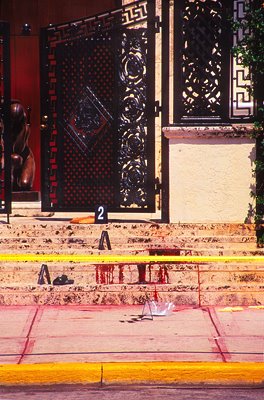
Nine years ago today, on July 15, 1997, a madman pumped two bullets into Gianni Versace's face and neck, and the great designer fell dead on the doorstep of his Miami Beach mansion, his blood and brains congealing on the pink steps to his palazzo.

A few minures later, the Washington bureau of a German television network telephoned me asking for quotes and information about Versace -- I spoke with them, then threw a camera bag across my shoulder and sped on my bicycle to Versace's mansion, just a half mile from my studio. The TV choppers and paparazzi were already there in force, buzzing noisily around the scene.

I made some pictures from the street before the police cordonned it off and put all the media beyond a yellow tape across the street. Versace's body was gone.

Versace loved South Beach and it loved him. His presence here had been good for business, too; and his murder, while not the cause of South Beach's decline, hastened it.

People talk about the bloody steps at the scene of the crime, but it wasn't just blood -- it was Versace's brain, his beautiful brain, splattered across the steps that sunny morning, the sticky gray matter dripping and congealing on the coral rock stairs. It was ghastly.

Labels: , , , , , , ,

Saturday, July 08, 2006


This neon sign is gone now, but this picture brings back the sexy, funky look and feel of South Beach as it was about 10 years back, when it was so hot and hip. The Chamber of Commerce won't love me saying this, but Miami Beach has for the most part lost its mojo. Sure, it's still a beautiful place -- the beach, the Deco buildings, the bicycle-anywhere lifestyle, the gorgeous light, and subtropical weather remain. But the burning, bohemian, fashion-forward, and independent creative spirit -- the vitality -- that animated South Beach has faded slowly away as the town trended ever more mass-market.

Money -- lots of money -- is being made, surely more than ever before here. But the avant-garde glamour and excitement that is supposedly why people come here has largely slipped away along with the avant-garde, the artists. There's a kind of hollowness to the town now.

The neighborhood is more crowded today, but emptier.

Of course, no location can remain the hot, new, fashionable place forever. It's a contradiction in terms; and South Beach enjoyed an extraordinarily long run of being fabulous, from the mid-nineteen-sevenites through the mid-nineties. A decade or two ago, the town was full of artists and their studios -- now it's got beautiful branches of the Banana Republic and Victoria's Secret stores in their place.

Part of South Beach's decline was inevitable -- an example of the usual cycle of slum-art neighborhood-gentrification-developent-and-exploitation. But I think poor leadership was also a factor, poor stewardship by the politicians and planners. Maybe I'll expand on this in a later posting.

Actually, I've been writing in my head two, new chapters to update my critically acclaimed, 1995 book, South Beach, America's Riviera, Miami Beach, Florida, originally published by Arcade and distributred by Little, Brown.

It's out of print now, but e-mail me if you're looking for a copy. For the revised edition, I want to survey many of the South Beach pioneers and heavy-hitters that I know, and ask them about their perceptions of the changes here.

In any event, the flocks of Amazon-like beauties and Apollo-like gay guys I used to see working out in my gym have almost disappeared. I used to see Cindy Crawford work out there; Madonna also was a member, though she used to have private sessions. The number of fashion shoots in town has declined so precipitously that one production house has mothballed its fleet of RV production vehicles, though big-budgeted hip-hop music video shoots have taken up some of the slack for the production houses and the high-end hotels. But the hip-hop artists have not filled the gap entirely.

The people-watching simply isn't as great as it once was, back when supermodels strutted down Ocean Drive like a runway every day; and you'd see Gianni Versace and his family lunching on Lincoln Road. The town seemed like an enchanted village, or a planet all its own, with magnificent beauties of all sexes, wearing very little clothing, Rollerblading everywhere, like suntanned gods and goddesses on wheels. The nightclubs and restaurants were incredible, and there was music and art in the steets. Energy in the air. You'd see big fashion shoots everywhere. Versace's murder in July of '97 symbolized the end of that era, and the beginning of a coarser, more ordinary one.

Over the last decade, many of South Beach's artists and other creative people have decamped for the mainland, and a Miami warehouse district called Wynwood is up and coming -- but, far from the beach, Wynwood and the other mainland neighborhoods are simply not the same.

Meanwhile, somewhere along the way, South Beach became not just a place, but a brand:

Martha Stewart introduced a line of funriture at K-Mart called "South Beach"; a Miami cardiologist dubbed his new weight-loss regime "The South Beach Diet," and it became a phenomenon, his book a best-seller; next there was a line of soda pop named "South Beach;" then came a beautifully photographed but terribly written TV detective show called "South Beach;" and Ocean Drive magazine (itself named after South Beach's main street) licensed a stylish line of Ocean Drive fashion sunglasses and even published franchised, satellite edtions of Ocean Drive in such unlikey locales as Canada; while I, myself, wrote and photographed a lavishly illustrated coffeetable book called South Beach.

A million magazines all over the world did South Beach stories, year after year -- about how hip it was, plus where to eat, where to stay, where to party, where to spend your money. I licensed a lot of photos to these magazines! Did a lot of assignments. Photographed a lot of restaurants, boutiques and hotels. New ones -- actually redone Art Deco ones -- were opening all the time. It was great. And I remember when Pavarotti gave a huge concert on the beach; and then the Today show and then Good Morning America did weeks of live broadcasts from the beach. Television crews from all over were everywhere. I was a consultant and on-air commentator for one South Beach show done by a German network. The tabloid TV shows went wild: the nightclub scene, the models, the Deco, the whole place was eye-candy. Some paparazzi guys I know were making fortunes, as was the fashion business. The nightclubs -- including some mafia ones -- were making millions. Of course, it had to end. It was over-exposure.

And as more people came and real estate prices went up, and the artists and quirky one-of-a-kind boutiques were forced out by higher rents and poor planning, and chain stores replaced them -- the demographics of the people coming and the quality of the experience here changed. The character changed.

Meanwhile, more luxury high-rises and corporate-owned hotels have been shoehorned into South Beach, blocking more views, but I feel the sex, excitement, and style they're selling is more a reflection of the old days of 10 years ago, than of the current reality. Nonetheless, there's still a sort of luxury mafia of high-end real estate developers, mega-glossy magazines, exclusive nightclubs, hotels, restauranats, p-r agencies, and a parade of B- and C-list celebrities still incestuously cross-promoting each other here, keeping the image alive. (And some of them are my clients!) And, truth be told, the old magic hasn't totally left South Beach. It still has its moments plus a lot of great restaurants. Moreover, the history of this resort town has always been cyclical.

But the smart, sexy and sophisticated South Beach vibration has weakened enormously, indeed the vibe has fundamentally changed -- as one spring-break, college girl from Tennessee told me this year, "I'm so disappointed. This is the trashiest place I've ever seen!" When spring-breakers come to your town and think it's trashy, things are pretty bad.

Labels: , , , , ,

Monday, July 03, 2006

Fourth of July Special