This neon sign is gone now, but this picture brings back the sexy, funky look and feel of South Beach as it was about 10 years back, when it was so hot and hip. The Chamber of Commerce won't love me saying this, but Miami Beach has for the most part lost its mojo. Sure, it's still a beautiful place -- the beach, the Deco buildings, the bicycle-anywhere lifestyle, the gorgeous light, and subtropical weather remain. But the burning, bohemian, fashion-forward, and independent creative spirit -- the vitality -- that animated South Beach has faded slowly away as the town trended ever more mass-market.
Money -- lots of money -- is being made, surely more than ever before here. But the
avant-garde glamour and excitement that is supposedly why people come here has largely slipped away along with the
avant-garde, the artists. There's a kind of hollowness to the town now.
The neighborhood is more crowded today, but emptier.
Of course, no location can remain the hot, new, fashionable place forever. It's a contradiction in terms; and South Beach enjoyed an extraordinarily long run of being fabulous, from the mid-nineteen-sevenites through the mid-nineties. A decade or two ago, the town was full of artists and their studios -- now it's got beautiful branches of the Banana Republic and Victoria's Secret stores in their place.
Part of South Beach's decline was inevitable -- an example of the usual cycle of slum-art neighborhood-gentrification-developent-and-exploitation. But I think poor leadership was also a factor, poor stewardship by the politicians and planners. Maybe I'll expand on this in a later posting.

Actually, I've been writing in my head two, new chapters to update my critically acclaimed, 1995 book,
South Beach, America's Riviera, Miami Beach, Florida, originally published by Arcade and distributred by Little, Brown.
It's out of print now, but
e-mail me if you're looking for a copy. For the revised edition, I want to survey many of the South Beach pioneers and heavy-hitters that I know, and ask them about their perceptions of the changes here.
In any event, the flocks of Amazon-like beauties and Apollo-like gay guys I used to see working out in my gym have almost disappeared. I used to see Cindy Crawford work out there; Madonna also was a member, though she used to have private sessions. The number of fashion shoots in town has declined so precipitously that one production house has mothballed its fleet of RV production vehicles, though big-budgeted hip-hop music video shoots have taken up some of the slack for the production houses and the high-end hotels. But the hip-hop artists have not filled the gap entirely.
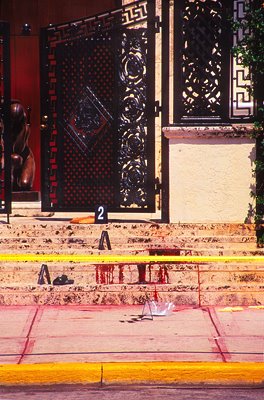
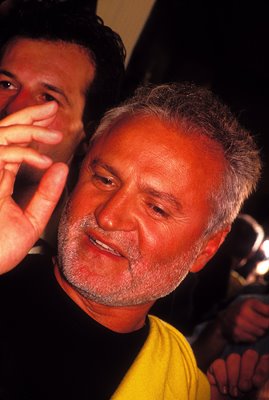
The people-watching simply isn't as great as it once was, back when supermodels strutted down Ocean Drive like a runway every day; and you'd see Gianni Versace and his family lunching on Lincoln Road. The town seemed like an enchanted village, or a planet all its own, with magnificent beauties of all sexes, wearing very little clothing, Rollerblading everywhere, like suntanned gods and goddesses on wheels. The nightclubs and restaurants were incredible, and there was music and art in the steets. Energy in the air. You'd see big fashion shoots everywhere. Versace's murder in July of '97 symbolized the end of that era, and the beginning of a coarser, more ordinary one.
Over the last decade, many of South Beach's artists and other creative people have decamped for the mainland, and a Miami warehouse district called Wynwood is up and coming -- but, far from the beach, Wynwood and the other mainland neighborhoods are simply not the same.
Meanwhile, somewhere along the way, South Beach became not just a place, but a brand:
Martha Stewart introduced a line of funriture at K-Mart called "South Beach"; a Miami cardiologist dubbed his new weight-loss regime "The South Beach Diet," and it became a phenomenon, his book a best-seller; next there was a line of soda pop named "South Beach;" then came a beautifully photographed but terribly written TV detective show called "South Beach;" and
Ocean Drive magazine (itself named after South Beach's main street) licensed a stylish line of Ocean Drive fashion sunglasses and even published franchised, satellite edtions of
Ocean Drive in such unlikey locales as Canada; while I, myself, wrote and photographed a lavishly illustrated coffeetable book called
South Beach.
A million magazines all over the world did South Beach stories, year after year -- about how hip it was, plus where to eat, where to stay, where to party, where to spend your money. I licensed a lot of photos to these magazines! Did a lot of assignments. Photographed a lot of restaurants, boutiques and hotels. New ones -- actually redone Art Deco ones -- were opening all the time. It was great. And I remember when Pavarotti gave a huge concert on the beach; and then the
Today show and then
Good Morning America did weeks of live broadcasts from the beach. Television crews from all over were everywhere. I was a consultant and on-air commentator for one South Beach show done by a German network. The tabloid TV shows went wild: the nightclub scene, the models, the Deco, the whole place was eye-candy. Some paparazzi guys I know were making fortunes, as was the fashion business. The nightclubs -- including some mafia ones -- were making millions. Of course, it had to end. It was over-exposure.
And as more people came and real estate prices went up, and the artists and quirky one-of-a-kind boutiques were forced out by higher rents and poor planning, and chain stores replaced them -- the demographics of the people coming and the quality of the experience here changed. The character changed.
Meanwhile, more luxury high-rises and corporate-owned hotels have been shoehorned into South Beach, blocking more views, but I feel the sex, excitement, and style they're selling is more a reflection of the old days of 10 years ago, than of the current reality. Nonetheless, there's still a sort of luxury mafia of high-end real estate developers, mega-glossy magazines, exclusive nightclubs, hotels, restauranats, p-r agencies, and a parade of B- and C-list celebrities still incestuously cross-promoting each other here, keeping the image alive. (And some of them are my clients!) And, truth be told, the old magic hasn't totally left South Beach. It still has its moments plus a lot of great restaurants. Moreover, the history of this resort town has always been cyclical.
But the smart, sexy and sophisticated South Beach vibration has weakened enormously, indeed the vibe has fundamentally changed -- as one spring-break, college girl from Tennessee told me this year, "I'm so disappointed. This is the trashiest place I've ever seen!" When spring-breakers come to your town and think it's trashy, things are pretty bad.
Labels: Bill Wisser, decline and fall, Miami, Miami Beach, photography, South Beach

 Marni is a remarkable Italian fashion house with a worldwide presence and a spacey, futuristic design aesthetic in all its stores.

 The sweeping, swooping space seemed to demand ultra-wide angle lenses, so that's what I used.
 A big slideshow of my Marni images is here.